
Water Scarcity
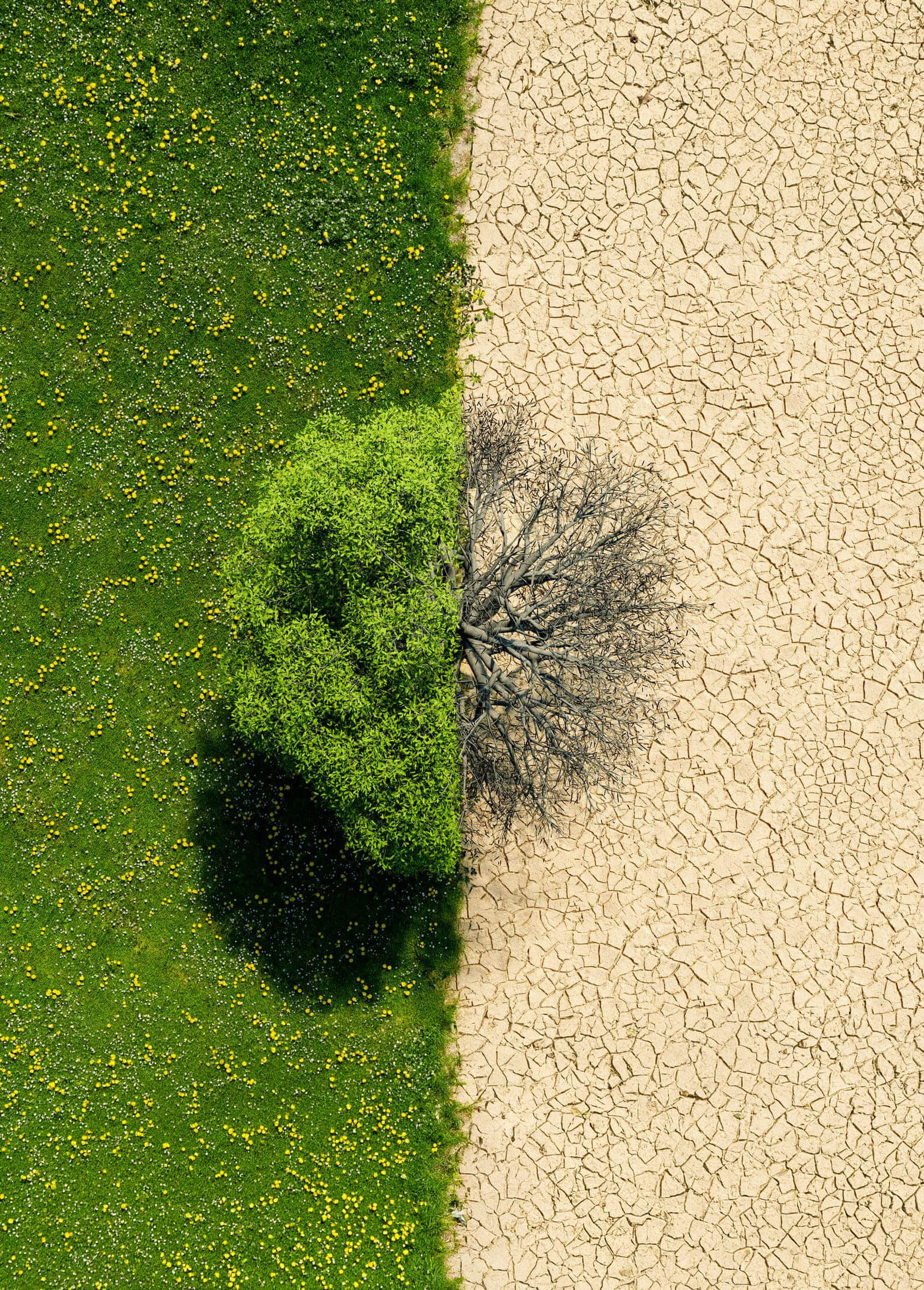
Water, an indispensable part of human and biological life, is gaining value day by day, while at the same time losing its perceived importance among people. Factors such as industrialization brought about by an increasing population and insufficient public awareness regarding water usage and sanitation are just a few of the reasons for this loss of perceived importance. This concept, also known as water scarcity, refers to the annual decrease in the amount of available water per person and the resulting situation where water shortages will prevail on a global scale in the future. The water crisis is not just a national or regional problem; it is an issue that the entire world must prioritize and take measures for.
Access to clean, usable and sufficient water is one of the most fundamental challenges posed by the high population in the current century. According to a 2020 paper, more than 1.2 billion people worldwide do not have access to water that is potable or usable for human life. And this was before the wars in Ukraine and Gaza, and before many global developments in the intervening six years. The water crisis is not a stand-alone problem; it indirectly affects many areas, from energy production to health care. According to the generally accepted view, a country or region is considered ’water poor“ when the annual amount of usable water per capita falls below 1000 m³. When this ratio is between 1000 and 7000 m³, it is called ”water stress“. Day by day, even countries defined as ”water-rich“ continue to approach these thresholds. To illustrate the seriousness of the situation with a concrete example, the amount of water expected to fall per capita in Turkey is calculated as 1200 cubic meters for 2030, 1116 cubic meters for 2040 and 1069 cubic meters for 2050.
The absence of water first brings to mind the concept of “water wars,” and settlements most affected by this concept are called “water-disadvantaged regions.” Due to drought risk and high population rates, Middle Eastern and North African countries stand out first in this regard. These countries are places where water-disadvantaged individuals are concentrated due to their geomorphological positions, geographical regions, and climates. For these individuals, whose access to water is much more difficult compared to most people, the water they can access is not always in the “usable water” category. This concept, which today we discuss for only a few regions, has started to spread globally due to the unconscious consumption of water and has increasingly brought the term “water wars” to the agenda.
The concept of conflict accompanying water wars reveals another dimension of the problem. However, diplomacy and agreements between countries instead of war are the correct solutions. Since the beginning of human history, water wars have not only reached the dimension of conflicts aimed solely at obtaining water resources. However, countries have always prioritized water by establishing their settlements in areas with water resources to develop their civilizations faster and ensure productivity in areas such as agriculture and animal husbandry. Wars fought to capture these regions, that is, struggles waged indirectly to be closer to water, have been referred to as “water wars.”.
Unless the necessary importance is given and joint action is taken at national and international levels, the water crisis will continue to grow. In this context, one of the most important suggestions is conscious consumption and informing people around us about this issue. It should not be forgotten that every big impact starts with a few small triggers.
References
https://dergipark.org.tr/tr/download/article-file/259635
https://dergipark.org.tr/tr/download/article-file/4502040
https://www.wwf.org.tr/?13200/dunyasugunu